
Ikat: The Blurred Beauty of Resist-Dyed Textiles
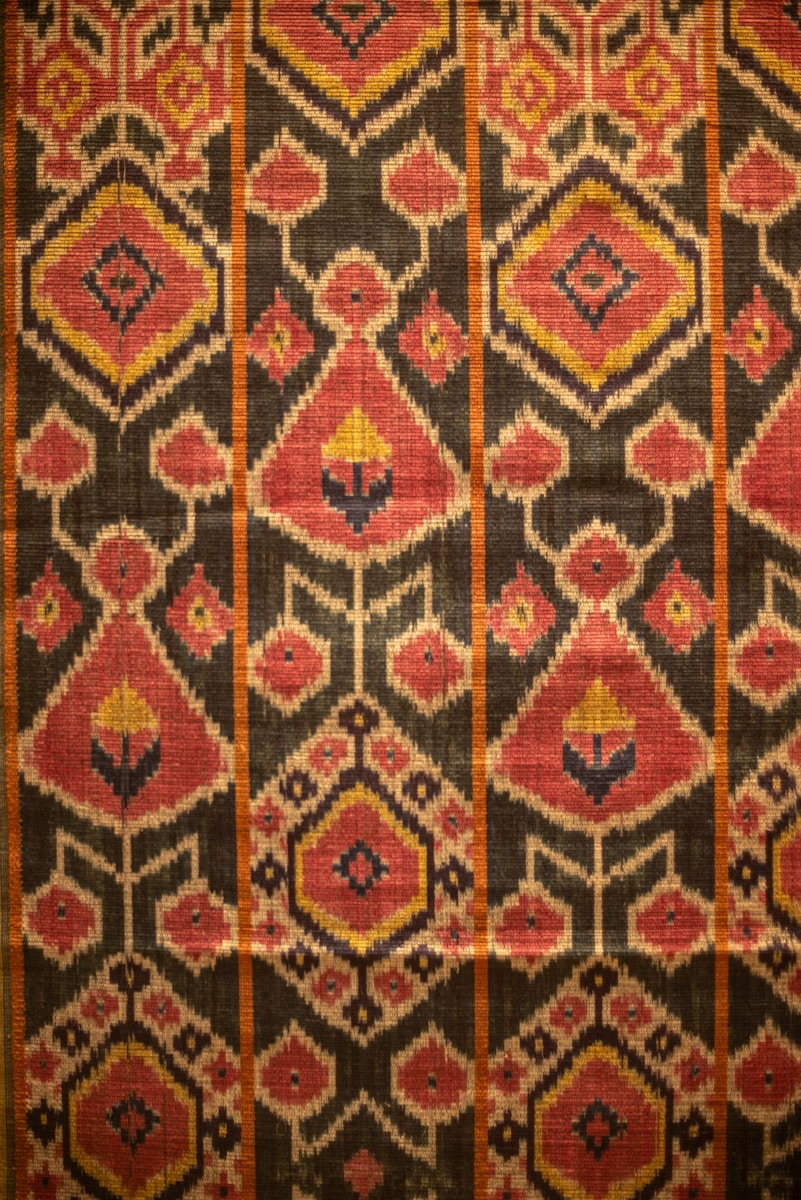
Ikat’s slightly fuzzy edges aren’t printing errors. They’re the visual signature of one of textiles’ most labor intensive techniques. This ancient dyeing method creates patterns before weaving begins, resulting in those characteristic feathered borders that distinguish ikat from printed fabric and signal serious craftsmanship.
What Makes Ikat Different
The name comes from the Malay-Indonesian word “mengikat” (to tie or bind). Unlike printed textiles where patterns are applied to finished cloth, ikat involves binding sections of yarn before dyeing, creating resist areas that remain undyed. When woven, these pre-patterned threads produce designs with soft, blurred edges, the hallmark of authentic ikat.
There are three types: warp ikat (vertical threads patterned), weft ikat (horizontal threads patterned), and double ikat (both directions patterned). Double ikat represents the technique’s pinnacle, requiring extraordinary precision since warp and weft must align perfectly to create the intended design. Only a few cultures mastered this technique, most notably in Gujarat, India, and Bali, Indonesia.
Global Ikat Traditions
Ikat isn’t owned by one culture. It emerged independently across continents. Central Asian suzani textiles, Japanese kasuri, Indonesian patola, Guatemalan jaspe, and Uzbek atlas silks all employ resist dyeing variations. Each tradition developed distinct aesthetic preferences, from geometric Central Asian designs to the intricate figurative patterns of Indian patola that could take years to complete.
Indonesian ikat holds particular cultural weight, with specific patterns reserved for ceremonial use or indicating social status. Certain motifs could only be worn by nobility, making ikat not just decorative but hierarchical. These textiles featured in religious ceremonies, marriage exchanges, and as diplomatic gifts between kingdoms.
Why Ikat Became Fashion Gold
Contemporary fashion embraced ikat for its artisanal credibility and bohemian associations. Those imperfect edges read as “handmade” in an era of digital precision, offering visual relief from perfect industrial printing. Designers from Oscar de la Renta to Isabel Marant have built collections around ikat’s organic appeal, recognizing that imperfection has become its own luxury language.
The textile industry now produces machine printed “ikat style” fabrics that mimic the blurred aesthetic without the laborious dyeing process. These imitations democratize the look but eliminate the technique’s essential quality: the slight variations and imperfections that come from human hands binding individual threads.
Identifying Authentic Ikat
Real ikat shows pattern on both fabric sides, though less distinct on the reverse. The design edges will have characteristic feathering, slightly irregular bleeding where dye penetrated the resist. If edges are perfectly crisp, it’s printed fabric imitating ikat’s aesthetic. Authentic ikat also shows occasional alignment imperfections where warp and weft threads don’t match precisely. These “mistakes” actually confirm hand crafted authenticity.
The global ikat revival has created both appreciation for traditional techniques and markets for contemporary weavers. When you buy authentic ikat, you’re supporting one of textiles’ most technically demanding and visually distinctive traditions.