
Gingham: The Humble Check That Conquered Kitchens and Couture
Gingham’s association with picnics, country kitchens, and Dorothy’s Kansas farmhouse makes it feel inherently American and rural. But this simple checked fabric started life as striped cloth in 17th century Southeast Asia, undergoing a complete visual transformation during its journey West.
From Malaysian Stripes to Western Checks
The word “gingham” likely derives from the Malay word “genggang,” meaning striped. Dutch and English traders encountered these striped cotton fabrics in Malaysia and Indonesia during colonial expansion, importing them to European markets where they became popular for their durability and washability.
Somewhere in the journey from Southeast Asian looms to European textile mills, gingham metamorphosed. European manufacturers took the concept of two color cotton and transformed it into the checked pattern we recognize today. By the 18th century, “gingham” described woven checked fabric, not striped, a complete pattern pivot that erased the textile’s original appearance.
The Weaving Makes the Pattern
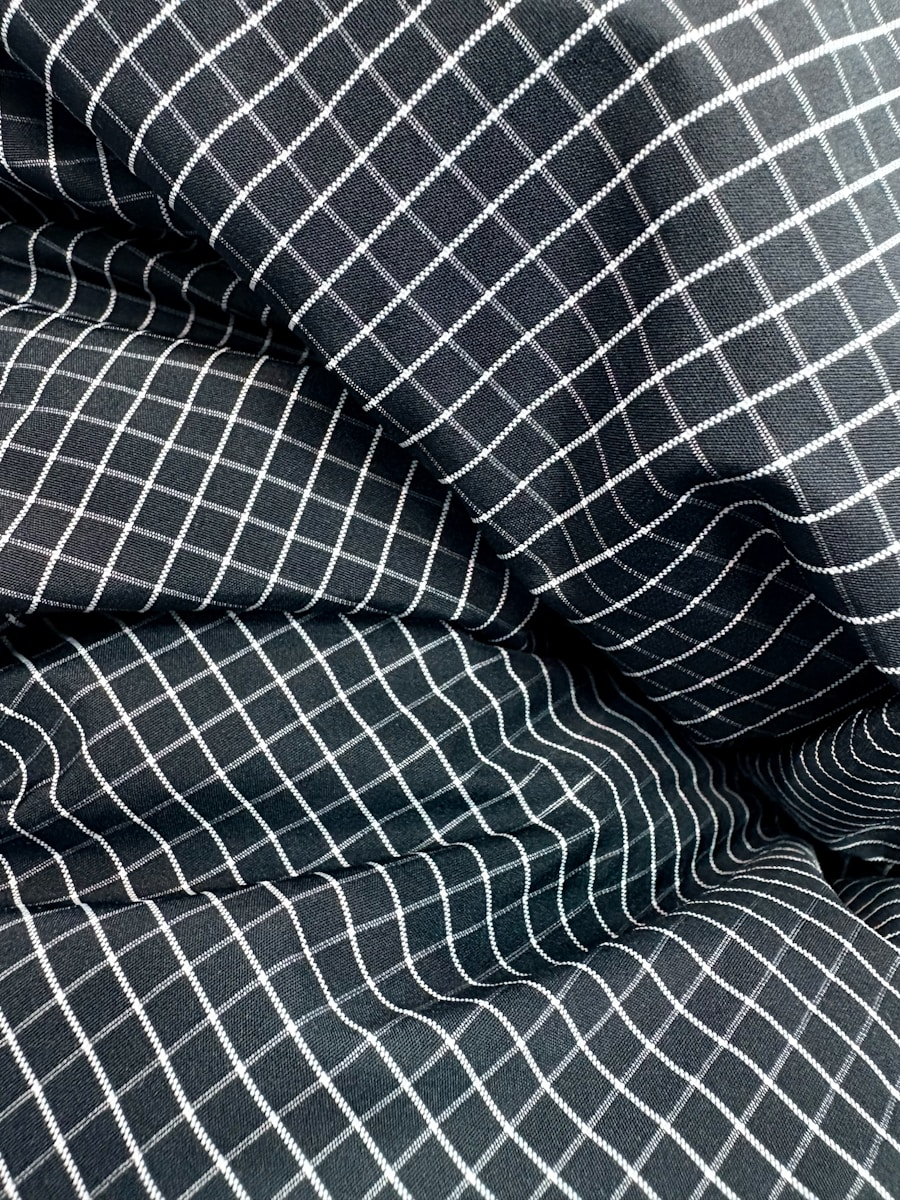
True gingham is always woven, never printed, with the check emerging from the intersection of pre-dyed threads. Typically, white threads cross colored threads (traditionally red, blue, or black) to create the pattern. Where colored warp and weft meet, a darker square forms. Where white crosses color, lighter checks appear. Where white meets white, blank spaces remain.
This simple woven structure makes gingham one of textile’s most economical patterns. No complex dyeing, no printing equipment, just two color thread and a basic loom setup. This accessibility made gingham the workingman’s cloth, practical for everything from aprons to shirts.
When Gingham Went High Fashion
Despite its humble origins, gingham has experienced multiple high fashion moments. Brigitte Bardot wore gingham in 1950s films, giving it unexpected glamour that photographers couldn’t resist. Claire McCardell championed gingham in American sportswear, elevating it from utility fabric to deliberate design choice. More recently, designers like Carolina Herrera and Altuzarra have built entire collections around supersized gingham checks that look impossibly chic.
The pattern’s fashion appeal lies in its inherent optimism. Gingham always looks fresh, clean, and slightly innocent. It carries nostalgic weight (childhood dresses, grandmother’s kitchen curtains) without feeling dated. That emotional resonance makes gingham a reliable tool for designers wanting to evoke specific feelings: simplicity, honesty, pastoral comfort.
Why Small Checks Work
Gingham’s scale typically stays small, usually 1/8 inch to 1/4 inch checks. This petite sizing prevents the pattern from overwhelming garments or creating unflattering optical effects on the body. Larger checks exist (called “buffalo check” when scaled up to inch wide blocks), but they’re technically different patterns despite similar woven construction.
The endurance of basic gingham proves that fashion doesn’t always need complexity. Sometimes a simple two color check, efficiently woven and reliably cheerful, outlasts far more elaborate patterns in our collective wardrobe.