
Paisley: The Persian Motif That Conquered the West
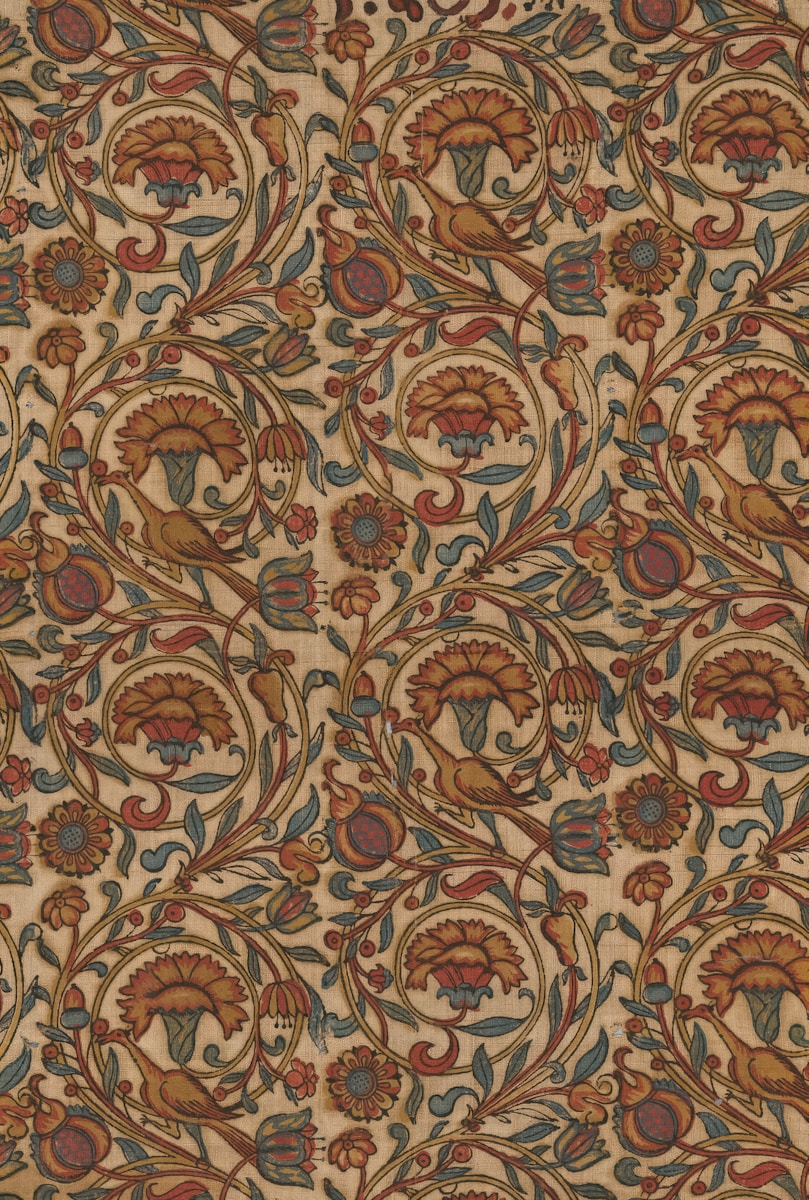
The teardrop-shaped design we call “paisley” has traveled further culturally than geographically, transforming from ancient religious symbol to psychedelic emblem across millennia. Known as ‘Buta’ or ‘Boteh’ in ancient Persia (meaning bush or shrub), the paisley motif has a documented history spanning over 2,500 years.
Decoding the Boteh Symbol
The paisley’s curved form has sparked countless interpretations. Some scholars identify it as the ‘teardrop of Allah’ or ‘tadpole,’ though it was likely based on the Chaldean date palm symbolizing the Tree of Life. Other theories suggest it derived from a Zoroastrian cypress tree combined with a floral spray, representing life and fertility. These competing origin stories reflect the motif’s migration across cultures, each civilization imprinting its own symbolic meaning onto the form.
Some researchers trace paisley’s origins to Ancient Babylon around 1700 BCE, while others point to the Iranian city of Yazd. What’s certain is that by the 11th century, Kashmiri weavers had mastered the boteh motif in intricate shawls that would eventually seduce European markets and drive Victorian women into acquisition frenzies.
How Scotland Named a Persian Pattern
Here’s where geography gets interesting. Between 1800 and 1850, the Scottish town of Paisley became the foremost producer of paisley shawls. Local weavers developed modified hand looms and Jacquard looms that could work in five colors while competitors managed only two. The town’s name became permanently attached to the pattern itself, a colonial twist where the manufacturer’s location overshadowed the design’s ancient origins.
Paisley shawls became Victorian obsessions, more affordable alternatives to genuine Kashmir imports. Scottish mills democratized an elite aesthetic, making the boteh motif accessible to middle class consumers who wanted a taste of Eastern exoticism without the Eastern prices.
Paisley’s Cultural Chameleon Act
The pattern’s genius lies in its adaptability. Paisley has signified wealth (Kashmir shawls), counterculture (1960s psychedelia), conservatism (traditional men’s ties), and bohemian freedom (festival fashion) without losing its essential identity. That curving teardrop form absorbs whatever cultural meaning we project onto it while maintaining its decorative integrity.
Unlike patterns tied to specific contexts, paisley flows between demographics and decades with remarkable ease. It can look equally at home on a banker’s pocket square or a musician’s bandana, a rare quality that explains its persistent presence in our visual landscape. Etro has built an entire house identity around it, proving paisley still has commercial power generations after its Persian origins.